Pilot Data for Learning Cohort Spring 2025
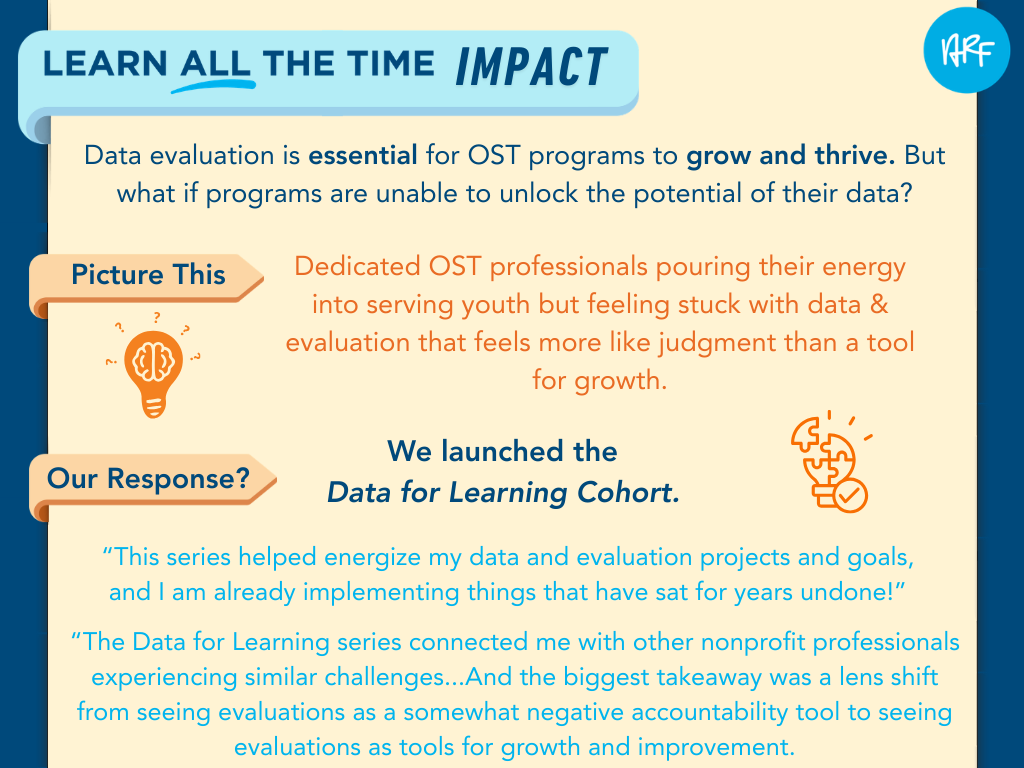
Picture this: passionate out-of-school time (OST) professionals pouring their energy into serving youth, but feeling stuck with data that feels more like a burden than a tool.
Out-of-school time organizations often struggle to tap into the real value of their data—for learning and continuous improvement. Evaluation can feel more like judgment than guidance, something done for funders instead of by and for the organization.
With limited time, staff, and resources, it’s tough to change that mindset and invest in data practices that actually support reflection and better outcomes. Every missed insight is a missed chance to better serve youth and families.
In the Spring of 2025, the Learn All the Time (LATT) Network, a coalition of Central Texas OST providers led by the Andy Roddick Foundation, launched a professional development cohort. Our goal was simple: Equip LATT Network Partners with what they need to strengthen their organization’s culture of learning.
In the Spring of 2025, the Learn All the Time (LATT) Network, a coalition of Central Texas OST providers led by the Andy Roddick Foundation, launched a professional development cohort. Our goal was simple: Equip LATT Network Partners with what they need to strengthen their organization’s culture of learning.
The pilot Data for Learning Cohort brought together small teams from four LATT partner organizations, creating a safe space where they could transform their relationship with evaluation. We named it Data for Learning because we believe data should ignite curiosity, not extinguish it. Over the course of several months, teams met regularly to explore training topics focused on the five core elements of effective evaluation in the out-of-school time (OST) field. Sessions included opportunities for cross-team sharing as well as dedicated time for teams to work together and apply new concepts.
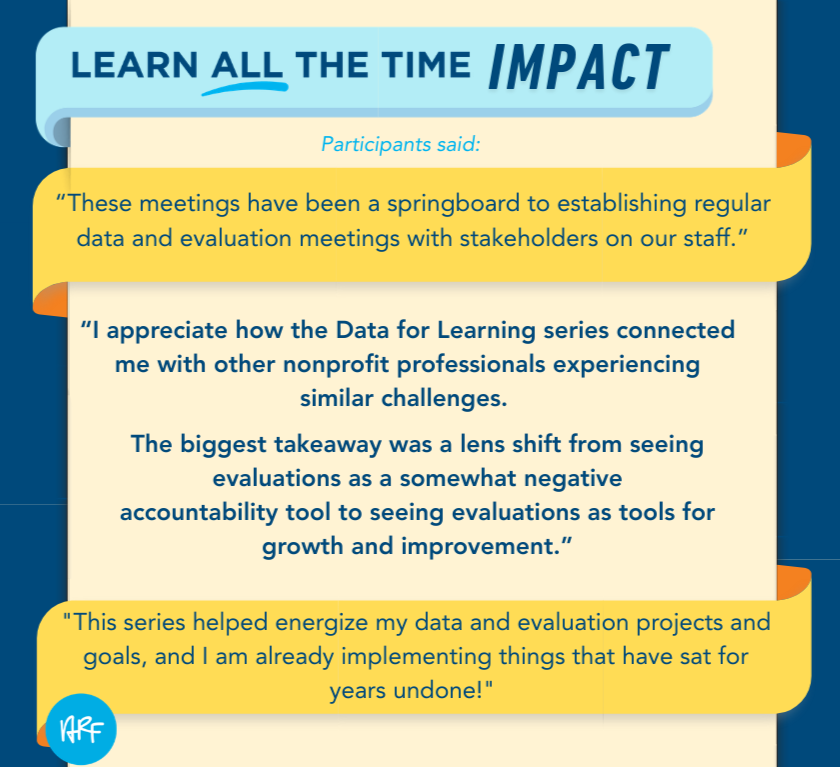
The impact was immediate. One cohort member shared, “We started meeting weekly as a team of key stakeholders to talk all things evaluation—from logistics needs to new questions to support the new curriculum.” Another noted that the series “helped energize my data and evaluation projects and goals, and I am already implementing things that have sat for years undone!”
Beyond the practical tools, participants shared how valuable it was to connect with other nonprofit professionals navigating similar challenges—building a sense of support that extended beyond the cohort itself. And perhaps most encouraging: Participants began to shift how they view evaluation, letting go of the idea of it as a “negative accountability tool” and starting to see it more as a partner in learning and improvement.
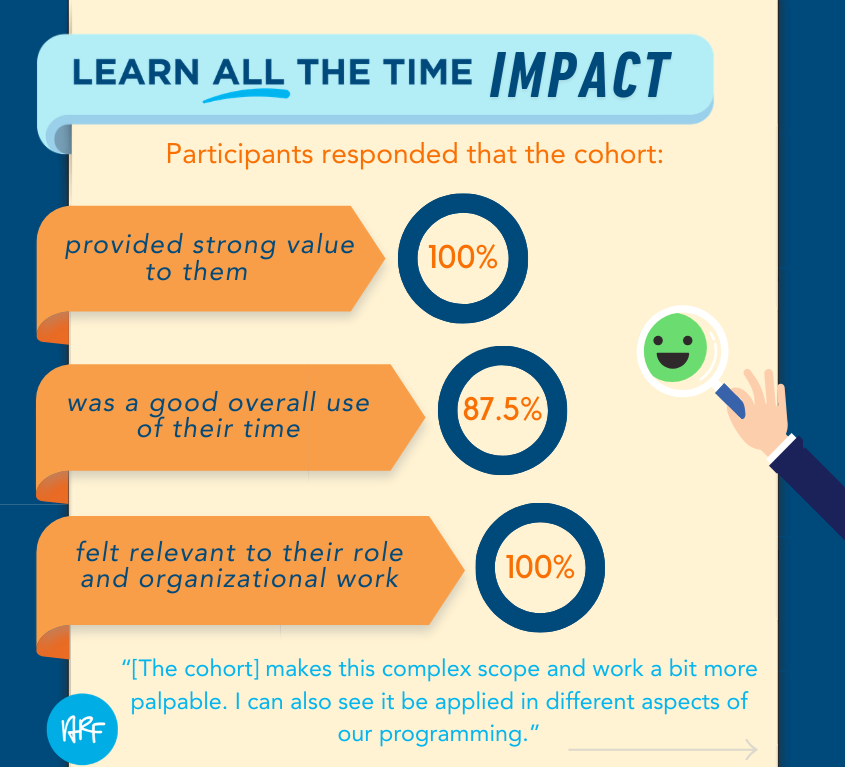
We are excited that the cohort has inspired this culture shift, and we look forward to continuing this Data for Learning journey together!